Insights from a Lyme journey,


for this wonderfully detailed story with loads of helpful information CLICK on this link:
http://www.betterhealthguy.com/images/stories/PDF/BetterHealthGuy_LIA_Lyme_Conference_FINAL.pdf


Dietrich Klinghardt, MD, PhD - Therapeutic Apheresis In the Treatment of Lyme Disease

  • More and more spouses and relatives of Lyme patients testing just as positive for Lyme but are asymptomatic. Who becomes symptomatic?
  • Toxic load that a patient load brings to the table is a major decisive factor. Determined by how much the patient has been exposed to and what their detoxification genetics are like.
  • His angle has always been the toxins were a primary issue.
  • When a patient has Lyme, biotoxins created by the infections easily overwhelm even normal detox pathways and there is no more room to deal with the aluminum, mercury, and other issues.
  • A killing agent leads to release of biotoxins from the microbes that have to be processed by the body through the same pathways as all other toxins.
  • Need to detox first before killing in some people.
  • Even the best detox methods may not be enough to prepare the person for the elimination of the Lyme bugs.
  • Leading practitioner is in Germany doing apheresis. Originally came from Japan.
  • Results in Lyme disease are astounding in chronic, severe cases.
  • Used also for longevity as an anti-aging tool.
  • Apheresis is an off-shoot of blood-letting.
  • Started in Japan in 1980 with observation of sponges in the deep sea that could feed on things that we consider toxic but not feed on things that we consider essential.
  • Filters absorb things that are bad but leave others untouched.
  • It is an off-shoot of dialysis. 2 IV catheters. Blood is taken out from one catheter. Red cells and white cells are then put back in through the other side and the plasma goes through a sponge that absorbs every known toxin. Insecticides, pesticides, heavy metals.
  • Treatment used to remove circulating cancer cells or after chemotherapy to remove chemotherapy residues.
  • Protein bound pathogenic or toxic substances are recognized by the filter and eliminated.
  • There is no need to infuse additional fluids.
  • There is no chemical put into the blood. Sensitive patients can do this.
  • Fantastic results for people with MCS.
  • Removes toxins bound to proteins and haptenes (involved in autoimmune diseases). Removes pro-inflammatory proteins.
  • Removes substances involved in thickened blood and hypercoagulation.
  • Everything the body needs is reintroduced to the body.
  • When you remove toxins from the blood, it creates an osmotic gradient and pulls other toxins into the blood.
  • Filter for virus, mycoplasma, metals, Lyme, environment toxins.
  • In the first treatment, they use a universal filter to see what is coming out of the patient.
  • Removes inflammatory cytokines and immune complexes.
  • The substances that are removed are reportedly enough to kill an elephant.
  • The filtered substances are then evaluated.
  • Blood tests are done before and after the filtration. Showed a positive tests for all 3 types of Lyme disease prior to filtration.
  • Aluminum, barium, and strontium found in one example he showed.
  • Aluminum in conjunction with mercury becomes a significant toxic issue.
  • Fluoride causes a destruction of our intelligence. Dietrich's own fluoride was high possibly due to fluoridation of water in the US.
  • Showed Lp-PLA2 of 253 prior to filtration with reference range < 151. After the filtration, it dropped to 153.
  • One 2 day treatment reduces body burden of toxins by 20% which is enough for hundreds of metabolic enzymes to start working again. The pumps start roaring at full speed and can deal with the rest of the toxins that remain.
  • Aluminum is the most significant co-factor that makes people with Lyme symptomatic vs. those that are asymptomatic.
  • Mentioned geo-engineering as a factor in aluminum and other toxins.
  • Took samples of snow after aerial spraying in Germany and found significant aluminum content.
  • He did a MELISA on aluminum which showed high allergic response to aluminum.
  • GeoEngineering - most planes have sprayers on wings that spray a carpet of aluminum and barium to reflect the sunlight and cool the earth; but at a very high price.
  • Exposure to EMF and chemtrails are the factors that have changed leading people to be more ill.
  • Aluminum does not show up when doing challenge tests as the body cannot eliminate it and the complexing agents used don't work well for aluminum.
  • Measured aluminum and barium in soil and on grass and found hundreds of times more than should be present.
  • Toxic environmental exposures impact horses and cattle; we are all the same animals.
  • His own filtrate showed aspergillus and BPA and toluene (air travel). He did not show any mercury suggesting that his detox protocol for mercury is working well.
  • Removing mercury (which suppresses Lyme) amalgams and replacing with BPA often makes a Lyme person become worse.
  • Sauna and homeopathics can be helpful for detoxing.
  • Extremely effective for MCS and CFS. Removes metals, solvents, dust and fine particles, bacterial and viral toxins.
  • Have had cures of genital herpes and other viruses such as EBV, HHV-6, etc.
  • Removes peroxynitrites from the system. These are a factor in neurological illnesses including ALS.
  • Used for MS, ALS.
  • Study of 8 people showed increase of ATP in mitochondria after only 1 session.
  • Chemofilter eliminates immune complexes, IgE, IgG, IgA, IgM, autoantibodies, CRP, interleukins, metals, fibrinogen, toxic LDL, etc.
  • Indicated for rheumatoid arthritis, macular degeneration, tinnitus, Guillain-Barre, MS, autoimmune diseases, etc.
  • Brain fog disappears, fatigue disappears, within a week after the treatment.
  • Aluminum and barium lead to bouts of high blood pressures.
  • Most people are tired afterwards for about a week. Main benefits come 2-3 weeks afterwards. Suggest doing it once per year. In some cases, may need 2-3 times per year.
  • Will be a game changer for kids but currently do only 11 years and older.
  • Desferal injections can help to remove aluminum. O'Mura has found that miso soup with cilantro can have profound detoxification effects. With a cilantro extract, found that you could decrease lead and aluminum content in 39 days by 50%. Cup of miso soup with fresh cut handful of cilantro every evening. Make a test vial for ART.
  • First day have physical. Treatment 3 hours next morning. Day after one more treatment in the morning. One hour train ride from Prague. Approximately $5,000 for the entire treatment.
  • http://www.inus.de, Dr. Richard Straube

Order Healthy Eats 5 Flavor Raw Coconut Cookies Here

FOR ONLINE ORDERS GO TO

FOR WHOLESALE, OTHER TREATS AND SPECIAL ORDER PARTY PLATTERS, PLEASE SEND AN EMAIL TO:   post@healthyeats.nl

6 signs you are gluten intolerant – and don’t even know it

Gluten a substance in wheat and other grains maybe found in a variety of foods including breads, caskes, cereals, pasta, commercial dairy products and alcoholic beverages

More than 55 diseases have been linked to gluten, the protein found in wheat, rye, and barley. It’s estimated that 99% of the people who have either gluten intolerance or celiac disease are never diagnosed. 

It is also estimated that as much as 15% of the US population is gluten intolerant. Could you be one of them? 

Six common symptoms of gluten intolerance 

(1) Gastrointestinal (GI), stomach, and digestive problems. These can include one or more of the following: gas, bloating, queasiness, abdominal cramping, constipation, diarrhea, or an alternating combination of both – IBS (Irritable Bowel Syndrome). 

(2) Headaches and/or migraines. 

(3) Diagnosis of an autoimmune disease such as Hashimoto’s thyroiditis, rheumatoid arthritis, ulcerative colitis, lupus, psoriasis, scleroderma or multiple sclerosis. 

(4) Emotional issues involving chronic irritability and sudden, irrational, mood shifts. 

(5) Neurological issues. This may include dizziness, difficulty balancing, and peripheral neuropathy affecting nerves outside the central nervous system and resulting in pain, weakness, tingling or numbness in the extremities. 

(6) Fatigue, brain fog, or feeling tired after eating a meal that contains gluten. 

Most of these symptoms are common to other health issues and diseases. That’s why identifying symptoms alone and trying to tie them to gluten intolerance is difficult. 

Am I Gluten Intolerant? 

The best way to determine if you are indeed gluten intolerant is to go on a gluten-free diet for 60 days. If you feel you can’t or won’t, that may already indicate you’re addicted to gluten. We are often addicted to things we’re allergic to. 

 Quinoa, buckwheat, millet and sorghum grains are gluten-free. So is rice. 

How to treat gluten intolerance? 

Eliminating gluten 100% from your diet means 100%. Even trace amounts of gluten from cross contamination or medications or supplements can be enough to cause an immune reaction in your body. 

The 80/20 rule or “we don’t eat it in our house, just when we eat out” is a complete misconception. An article published in 2001 states that for those with celiac disease or gluten sensitivity eating gluten just once a month increased the relative risk of death by 600%. 


info from undergroundhealth.com

Real Life Testimonial: Ben’s Recovery From Lyme Disease and how diet helped

A story of recovery from Lyme disease through diet
Ben wrote a fitness column for a newspaper out of college, and I’d always prided myself an example of robust health. He lost his health in his twenties, and, in an all-out attempt to regain it, set off down a path that would take him through just about every medical and dietary paradigm imaginable.
In this case, catastrophe struck in the form of a tick bite that I never new I had. – It took dozens of doctors and several years of debilitating symptoms before he received a diagnosis of late-stage, Neurological Lyme disease (an ever increasing epidemic that half the medical community claims doesn’t exist). – And once I did find a “lyme literate” MD, who believed that my crippling fatigue, migrating pain, bouts of paralysis, and multiple brain lesions might be something more then a psychosomatic response, his only solution was to soak me in a steady stream of oral, Intra-muscular, and Intravenous antibiotics for 3 years straight; after which time it not only innihilated my gut flora, but also forced the Lyme-bacteria deeper into my cells where it was effectively blocked from further treatment by a thick layer of systemic candida overgrowth. (eating a “clean” detoxifying vegan diet of fruits nuts and whole grains, in retrospect, was the worst thing I could’ve been doing during this whole time) Yup – at age 26, too weak to walk the length of a city block, and too brain-fogged to tie my own shoos (seriously), I considered myself pretty much screwed.
It wasn’t until after I went strict paleo for a year that my candida levels eventually came down to a point where I could successfully get through to, and treat the Lyme using gentle homeopathic methods that, when implemented in the right context (low-carb paleo diet) have proven to be incredibly successful!
So, yes, you may now say that the paleo diet even played a major role in rescuing someone from the depths of the rabbit hole that is the world of chronic Lyme – but, honestly, what helped me the most is the confidence I gained to pursue my own path toward health no matter what!
The world of chronic Lyme is fraught with taboos, politics, and pre-conceived notions of treatment.  Never give up and ask all the essential questions in the face of dogmatic medical practices and demand answers; to be skeptical about everything and never settle when  health is at stake until a way is found that works.. and ultimately, save your own life.

Raw probiotic lemon pudding


 Lemon Pudding -df, gf, sf
2 cups coconut meat / or 2 avocados
2 tablespoons coconut oil
1/2 tspn vanilla bean 
1 tsp lemon zest
juice of 1/2 lemon
1/4 cup raw honey/ or soaked dates
(to thicken add a spoonful of soaked organic raw oats)-optional

blend everything until smooth, I use a heavy duty food processor or a very strong blender like this kitchen aid, I have broken several cheaper versions, so it was worth it for me to invest, getting those dates smooth is a killer for those cheap machines.

 To culture this you can add 1 capsule (1/8 teaspoon) of your favorite probiotic powder and let the yogurt sit overnight at room temperature 

Peanut Butter Bars (from the oven) gluten free


Peanut Butter Bars

makes 8 “granola” sized bars or 16 squares
Serve these with a smoothie or a piece of fruit for breakfast on the run!
  • 1/4 cup coconut oil
  • 1/4 cup natural Peanut crunchy butter
  • 1/3 cup honey or agave
  • 1 tsp vanilla
  • 1 1/2 cups rolled oats (or quinoa flakes)
  • 2 Tbsp flour of choice (whole wheat, spelt or gluten free blend)
  • 1/4 cup raisins
  • 2 Tbsp hemp hearts (or sub in sunflower/sesame seeds)
  • 1 Tbsp chia Seeds (or sub in sunflower or sesame seeds)
Note: GF: use gluten free oats or quinoa flakes
Preheat oven to 350 F. Prepare a 8×8 or bread pan with parchment paper or foil. Melt the coconut oil so that it reaches its liquid state. In a medium size boil, mix oil, peanut butter, honey and vanilla. Add in the dry ingredients and stir until well incorporated. Pour the mixture into a prepared pan. Press the mixture down using your hands or a spoon. Bake for 15 minutes or until the edges start to turn golden brown. Cut into bars while still warm. Allow to cool. Store in an airtight container in the fridge for up to 2 weeks.


thanks to beyondthepeel.net

3 recipes: Easy Walnut Dehydrator Crackers, Super Flax Crackers, and Vegan Bacon


Walnut Zucchini Crackers

2 ½ c. walnuts soaked 1 hr. or more
2 ½ c. cubed zucchini
½ c. ground golden flax seed
¼ c. hemp seed
2 teaspoons sea salt

Grind walnut in food processor until they are in very small uniform pieces (couscous looking) - transfer to bowl.

Grind zucchini in food processor

until they are in very small uniform pieces - add to bowl.

Add ground flax, hemp and salt. Blend well. Add enough water to make spreadable dough ( 1/2 to 1 cup).

Spread on dehydrator trays.

Dehydrate - Flip - until crisp.

Cut in to chips - flat bread or desired sizes.


Kelly's Super Flax Crax - ModifiedFrom Carol Alt's "The Raw 50"

3/4 cup flax seeds, soaked for a few hours and drained
3/4 cup flax seeds, ground
1/2 cup pumpkin seeds, soaked for 4-6 hours and drained
1/2 cup raw pistachio, soaked for 4-6 hours and drained
1/8 cup lemon juice
1/2 cup red, yellow or orange bell pepper, roughly chopped
1/2 cup red onion, roughly chopped
1 garlic clove, crushed
1 tbs cumin
2 tbs dulse flakes
2 tbs Tamari
1 1/4 cup water (or more)
1/2 cup fresh parsley, chopped

- Drain the soaked flax seeds and transfer to a large bowl.

- Grind the rest of the flax seeds in coffee grinder, add to bowl and set aside.

- In food processor, combine pumpkin seeds, pistachios, lemon juice, bell pepper, onion, garlic, cumin, dulse, and Braggs. Process until smooth and add to the bowl.

- Add water to the mixture, and stir in the parsley.

- Let stand for at least 30 mins. The batter should be thick and spreadable. If necessary, add more water until spreadable consistency is reached.

- Spread about 1/8 " thick on teflex sheets. (It should fill 2 to 3 sheets.) Score and dehydrate for a few hours, until dry to the touch.

- Flip and transfer over to mesh. Continue to dehydrate until fully dry and crispy. (I left them overnight.)


Bacon 
1 large eggplant peeled and thinly sliced lengthwise. (You can use a wide veggie-peeler or a mandoline for this.)

Marinade:
3 Tablespoons olive oil
1 teaspoon black pepper
2 Tablespoons maple syrup
3 Tablespoons Ume Plum vinegar
2 Tablespoons Apple cider vinegar
2 Tablespoons cider
1 Tablespoon liquid smoke

Marinate for 2 or more hours. . . I like 6 or so.

Spread them out on the teflex and dehydrate for 8 hours and then turn the "bacon" and dry another 8 hours.

- Liquid Smoke can be found in the 'sauce' section of some grocery stores. I tried it without and the bacon still turned out delicious!


Some New Longevity Discoveries


Scientists Discover Common Antibiotic Can Slow Aging

 Animals given Doxycyclin throughout life lived longer

A multinational group of scientists have discovered a key mitochondrial pathway invloved in lifespan can be manipulated by exposure to a common drug at key life stages.
The study began by studying gene transcription variability among mice of different eventual life spans capitalising on the natural variability to find genes linked to longevity.  They discovered a group of three genes on chromosome two that had never previously been  linked to lifespan.  It was found decreased expression of these genes correlated with longer lifespan.
The genes were shown to code for mitochondrial ribosomal proteins (MRP) which act to make protein from mitochondrial DNA within the mitochondria.
It turns out that when MRP levels are reduced, the stress of protein imbalance within the mitochondria causes  a reaction called in the unfolded protein reposnse.  When the unfolded protein response was made to occur at specific developmental stages, the animals lived longer.
Furthermore the group showed this mechanism was so important as to be conserved from worms to mammals - inhibiting MRP in worms prolonged their lifespan too.
Pharmacological inhibition of MRP with certain drugs also were able to prolong lifespan, when given to young animals.  The scientists used the antibiotic Doxycyclin as mitochondria are evolutionarily derived from bacteria that became part of animal cells.  Animals given doxycyclin throughout life lived longer.  Cellular studies also proved the antibiotic reduced mitochondrial respiration in mammalian cells.
They conclude:
The apparent conservation of mitonuclear protein imbalance and UPRmt as a general longevity mechanism should invite further studies to explore whether targeting UPRmt can prevent ageing associated functional decline and treat diseases linked with ageing

Boosting Single Gene Found to Increase Maximum Lifespan 28%

survival parkin
Scientists at UCLA have discovered that increased expression of a single gene increases the lifespan of fruitflies by more than 25%.
The gene is called Parkin, and when defective is implicated in the development of Parkinson’s disease.
The gene normally functions to recycle cell proteins and defective mitochondria.  It acts to tag defective structures so they are degraded an recycled.  It tags them by adding a ubuquitin to the protein’s surface.
It seems clear that at least in part, aging is due both to accumulation of damaged and misfolded proteins in the cell, and increasing numbers of defective and leaky mitochondria, the latter of which release reactive oxygen species which then lead to further damage.
So it seems plausible that if it were possible to amplify the functioning of the cellular garbage disposal system, aging might be reduced.
Amazingly this is just what was found.
When parkin was genetically overexpressed in all cells of fruitfiles they exhibited a dramatic 28% increase both in mean and more importantly maximum lifespan.  In addition these long lived flies showed no loss of function and appeared healthy.
The authors conclude:
Our work strongly suggests that treatments designed to augment Parkin expression during aging may delay the onset and progression of a number of age-onset diseases
Of course we cannot genetically modify adult humans, however the development of small molecules which can either activate, enhance or mimic Parkin within cells could lead to dramatic increases in healthy human lifespan.

from http://extremelongevity.net

Rawfood Festival! 16 Juni 2013, 11:00- 00:00 Boerderij Langerlust, Amsterdam / COME TASTE SOME OF MY HANDMADE RAW COCONUT COOKIES!

Come taste some Healthy Eats Raw Coconut Cookies, all 5 flavors with Chia seeds
FOR MORE INFORMATION GO HERE

WELCOME TO THE FIRST ANNUAL
Dutch rawfood festival!
Kom naar het Dutch Rawfood Festival! Heerlijk eten, drinken en dansen. Geniet van een spectaculair paradijs. Met de allerheerlijkste diervriendelijke lekkernijen, met een sterke focus op gezondheid en welzijn!

16 Juni 2013, 11:00- 00:00
Boerderij Langerlust, Amsterdam


http://www.rawfoodfestival.nl/

3 Ingredient Raw Chocolate Fudge


What you need to make this....
Directions
1. Throw the ingredients in a tiny bowl.
2. Grab a spoon
3. Mix it together it can take a little while to mix properly, if your coconut oil is hard. It might look dry at first, but just go with these measurements and mix it together. Within a few minutes you'll get a smooth texture.
4. Enjoy!

Low-Sugar, High Nutrient Vegetables. Here are 8....and a recipe

Salad Greens: These include all leafy greens you use to make a salad. According to the American Dietetic Association, salad greens are basically “free” foods, meaning you can eat as much as you desire. They have less than 20 calories, plenty of healthy vitamins and fewer than 5 grams of carbs per one-cup serving.
Peppers: Peppers range from mild and sweet to fiery hot and everything in between. All forms of peppers are excellent for weight loss and weight management. Peppers are one of the richest sources of vitamin C, which boosts  immune system function and assists in the assimilation of other nutrients. This low calorie food contains only 15 calories per serving (1/2 cup), and 1 gram of fiber.
Sweet Potatoes: Although sweet potatoes are higher is sugar than some other vegetables, they are jam-packed with nutrients. A 4-oz potato contains only 80 calories, has 3 grams of fiber and is one of the best sources of potassium. These tasty potatoes also contain vitamin C and vitamin A.
Tomatoes: One cup of cherry tomatoes contains only 25 calories, but has 2 grams of protein and 2 grams of fiber. The biggest health bonus of tomatoes is that they are rich in lycopene, a carotenoid which is highly beneficial for cancer prevention, according to the Linus Pauling Institute.
Portabella Mushrooms: These large and tasty mushrooms are packed with health promoting compounds. Perfect for marinating and tossing on the grill, portabellas contain copper, riboflavin, niacin, copper, phosphorus, thiamin and pantothenic acid.
Spinach: Popeye was right when he said to eat your spinach. One of the least sugary vegetables, spinach has only 10 calories per one cup serving, and plenty of fiber. Enjoy spinach as part of salad, or lightly steamed. Some people even put a handful in their smoothies or juices.
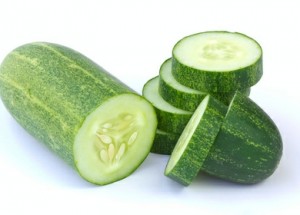
cucumberCucumbers: Who can resist the slightly sweet taste of a fresh cucumber? They are one of the oldest known cultivated vegetables, native to India. They are now one of the most commonly grown crops in America. Cucumbers are extremely low in calories and high in water. They contain numerous vitamins and minerals and also act as a detoxifier, assisting the body in the elimination of dangerous toxins.
Cabbage: Cabbage is a low calorie, high nutrient blood cleanser that removes free radicals and uric acid, which can lead to arthritic pain, skin diseases and gout. Cabbage is excellent roughage, high in vitamin C, and also contains beneficial iodine. Iodine is necessary for proper brain, endocrine and nervous system functioning.

Spinach Salad With Tomatoes, Cucumber and Feta

1/2 small red onion, sliced (optional)
6 ounces baby spinach
1 pound tomatoes, cut in wedges or diced
1 small cucumber, cut in half lengthwise, then sliced
8 calamata olives, pitted and cut in half lengthwise
1 green or red pepper, thinly sliced
2 teaspoons chopped fresh dill
1 tablespoon chopped fresh mint
2 tablespoons fresh lemon juice
Salt to taste
5 tablespoons extra virgin olive oil
2 ounces feta cheese, cut in small dice or crumbled
1. Place the onion in a bowl, cover with cold water and let sit for five minutes. Drain, rinse and dry on paper towels. (The reason for soaking the onion is to wash away some of the compounds that cause the onion flavor to linger in your mouth.) Combine with the tomatoes, cucumber, olives, pepper, dill and mint in a large bowl.
2. Mix together the lemon juice, salt and olive oil. Toss half of the dressing with the tomato mixture and half with the spinach. Combine everything in one bowl, add the feta, toss together thoroughly and serve.

some info from thealternativedaily.com

Autoimmune Depression and Foods that Can Help

Depression: Why is it so common among patients battling an autoimmune illness?  

The easy answer would be to say a chronic illness changes our life so much, why wouldn’t we be depressed?  (Duh!)  If you took a perfectly happy person & took away their job/school, friends, make them feel like few people understand their life, the ability to care for themselves or do what they are passionate about… yeah,  that alone would equal depression (times ten!)  Now add in feeling awful, physical pain, discomfort, having to juggle Doctors, labs, tests, uncomfortable procedures and that has to be “How to become Depressed for Dummies” if I’ve ever read it!

So okay so we have the ingredients for depression.  But so do a lot of people battling a lot of different health conditions and depression doesn’t seem to follow them like it does for so many of us.  Why does it seem we hear about a much higher rate of depression and anxiety in immune illnesses than say, people battling chronic cancer?

A very elevated prevalence of depression was found in people with Systemic Autoimmune Disease ( 69% ) Sourcehttp://www.ncbi.nlm.nih.gov/pubmed/22078697

One answer could be Depression Is Autoimmune Too:  More studies are showing the inflammatory state of autoimmunity may actually be causing the depression,not the lifestyle the illness causes.  

“Recent studies have found that autoantibodies play an important role in the pathogenesis of depression both in animal models and humans” Source

Many people I have talked to say they often feel like something triggers the depression: severe weather, eating the wrong things, being around anything they react to, stress.  Basically all the things that trigger the illness seem to be triggering the depression flares as well.

There are certain red immune system flags we see with the syndrome of depression quite frequently, most specifically increases in the cytokines TNF-alpha, IL-6, and C-reactive protein.    These chemicals found in the blood and spinal fluid tell us a brigade of our immune system is on high alert, kicking a** and taking names, so to speak.  Problem is, when there are no invading a**es left to kick (or the invaders are too clever and elude our defenses), our brains get the full onslaught and neurons die and then you can’t concentrate, and you avoid social activities, and you may find yourself crying a lot.  Emily Dean, MD

If you are thinking TNF-alpha sounds familiar, you’re right.  High TNF-alpha has been found in MECFS patients and is the reason some Doctors are on a mission to use TNF-alpha inhibitors on patients.

But here’s where it gets really juicy:

Genetics play a huge role in depression, it is often hereditary in families.  How would having a strong hereditary for depression link up to an autoimmune depression? Genes!

In all the genome searching (to find the gene responsible for depression), a couple of genes have come up consistently involved with depression in certain predisposed families.  Both of them happen to be involved with cytokine signaling/immune function.  That would be a heck of a coincidence.  Emily Dean, MD

“Happy, Happy”


It is well known that symptoms of clinical depression 

are likely mediated by inflammation in the brain.

FOODS THAT CAN HELP DEPRESSION

Many foods contain nutrients that are vital to hormonal and neurochemical activity and balance in our brains. Symptoms of depression and anxiety are worsened by vitamin and nutrient deficiencies. Foods rich in the following nutrients can help reduce anxiety and improve mood.

Omega-3 Fatty Acids

Omega-3 fatty acids relieve inflammation and facilitate communication between nerve cells in the brain. Individuals who are deficient in omega-3 fatty acids, or who lack the proper balance of omega-3 and omega-6 fatty acids, are more susceptible to mood instability. Eating foods rich in omega-3s, including alpha-linolenic acid (ALA), eicosapentaenoic acid (EPA) and docosahexaenoic acid (DHA), improve symptoms of depression. There is also some evidence suggesting that omega-3 fatty acids may also alleviate panic attacks. Foods rich in omega-3 include fish (particularly fatty or cold-water fish), such as mackerel, trout, herring, sardines, salmon, halibut, bluefish and tuna; nuts and seeds, such as walnuts, flax seeds and pecans; oils such as flaxseed oil, cod liver oil and sardine oil; and leafy greens such as spinach, kale and collard greens.
Tofu and soybeans also contain omega-3 fatty acids and are recommended additions to the diet.

Antioxidants

A 1998 study published in the Journal of Nutritional and Environmental Medicine lends support to using antioxidant therapy to improve mood. A sample of patients with peripheral arterial disease was given an antioxidant-rich treatment. Though the treatment had no significant impact on cholesterol or disease levels, significant improvements in mood were observed independent of disease status.
Foods with antioxidant properties are those rich in beta-carotene and vitamins C and E. Some of the best antioxidant food sources include fruits (berries, pomegranate, grapefruit, pineapple), legumes (broad beans, soy beans), vegetables (kale, peppers, spinach, beets) and nuts and seeds (pecans, walnuts, sunflower seeds).

Vitamin D

Vitamin D-rich foods boost serotonin, a neurotransmitter strongly associated with both depression and anxiety. Fish such as cod, tuna, herring, salmon, mackerel and sardines, and dairy such as eggs, margarine and fortified butters, are all good sources of vitamin D.

Amino Acids

L-tyrosine is an amino acid used by the brain to make the neurotransmitters norepinephrine and dopamine, both of which are related to mood. Foods rich in L-tyrosine include protein-rich foods such as poultry, beans, tofu, lentils, seafood and meat.
Low levels of serotonin are associated with anxiety and depression. L-tryptophan--the building block of the neurotransmitter serotonin--can boost serotonin and improve mood. Turkey, tuna, poultry, bananas, baked potatoes (with skin), kelp, tofu, dairy (eggs, milk, cheeses, yogurt), legumes (lentils, beans, nuts), soy (soybeans, soymilk) and seeds (sunflower seeds, pumpkin seeds, sesame seeds) all contain L-tryptophan.
Deficiency in L-lysine increases stress-induced anxiety. Protein-rich foods like meat, pork, poultry, cheese (parmesan), fish (cod, sardines), nuts, soybeans, tofu and eggs can boost dietary intake of L-lysine and reduce anxiety.

Melatonin

Melatonin is a hormone that regulates sleep. Insomnia can be a symptom of both depression and anxiety. In some cases, insomnia can be caused by insufficient melatonin secretion. Foods contain much smaller amounts of melatonin than can be found in supplement pills; nonetheless, some foods containing small amounts of melatonin include oats, rice, sweet corn, tomatoes, ginger, bananas, radishes and barley.

Vitamin B Complex

Vitamin B complex is made up of several B vitamins that support the nervous system and balance and transmission of neurotransmitters in the brain.
Vitamin B6 is vital to the processing of the neurotransmitters serotonin, melatonin and dopamine. It can be found in foods like liver, red and green peppers, hazelnuts, peanuts, cashews, turkey, cod, whole grains, wheat germ, beef and pork.
Vitamin B12 is important in red blood cell formation, and deficiencies can lead to mood swings. Foods rich in B12 include shellfish (clams, mussels, oysters), liver, fish (mackerel, herring), cheese, eggs, meat, lamb, crab and lobster.
Vitamin B5 (pantothenic acid) is important in hormone and acetylcholine formation, and deficiencies can lead to depression. Pantothenic acid is found in a wide variety of foods, so deficiencies are relatively rare. Some of these foods include liver, beef, sunflower seeds, salmon, poultry, nuts, dairy, potatoes and fresh fruits.
Sufficient amounts of niacin (Vitamin B3) are necessary to avoid symptoms of agitation, anxiety and cognitive deficits. Foods high in niacin include fish such as tuna and salmon, poultry and mushrooms.
Thiamin (Vitamin B1) is responsible for converting glucose into energy that can be used by the brain. Deficiencies can cause a host of problems ranging from fatigue to memory deficits to anxiety and insomnia. Foods rich in thiamin include lentils, peas, long grain brown and white rice, whole wheat/wheat germ, brazil nuts, pecans, spinach, oranges and cantaloupe.

Herbs and Drinks

Certain herbs and herbal drinks produce a calming and pleasurable effect. Chamomile and catnip tea, kava and valerian root are among the most effective herbal depression and anxiety remedies. Green tea containing the amino acid theanine may also have a calming effect on the brain.


from http://www.livestrong.com and 
http://blog.healclick.com
Make Peace With Food

Amazon